
Setting up a new job site means a long list of things to get right before the first crew shows up, and restrooms are one of the easiest to overlook until someone asks where they are. This checklist covers construction site porta potty requirements for Phoenix-area contractors: how many units to order, when to add hand wash stations, where to place everything, and how servicing, billing and pickup work once the job is moving.
Every rental from Southwest Sanitation includes weekly servicing and next-business-day delivery. If you’re mainly trying to work out a head count, our post on how many portable toilets are required per construction worker goes deeper on the numbers.
Construction site porta potty requirements in one checklist
Use this as a quick pre-start review. Each item is covered in more detail below.
- Unit count: at least the OSHA minimum for your peak crew size, plus room to grow.
- Hand washing: a hand wash station near the restrooms, especially where crews handle paint, coatings or other contaminants.
- Accessibility: an ADA unit if anyone on site, or anyone visiting it, needs one.
- Placement: in front of the property, within 25 feet of the street, on level ground the service truck can reach.
- Fencing: temporary fencing if the site needs to be secured or screened.
- Servicing: weekly servicing is included, and you can add units as the crew grows.
- Billing and pickup: a 28-day billing cycle, with 2 days’ notice to schedule a pickup.
Unit count: use the OSHA ratio as the floor, not the goal
Federal OSHA’s construction sanitation standard (29 CFR 1926.51) sets the minimum number of toilet facilities based on how many workers are on site. Arizona runs its own OSHA-approved program, ADOSH, so check with your safety lead on how it applies to your project.
| Number of workers | Minimum toilet facilities (OSHA Table D-1) |
|---|---|
| 20 or fewer | 1 |
| 20 or more | 1 toilet seat and 1 urinal per 40 workers |
| 200 or more | 1 toilet seat and 1 urinal per 50 workers |
Those numbers are the minimum. On a real job site, a few things push the count higher:
- Peak crew size: size for the busiest phase, when framers, electricians, plumbers and inspectors may all be on site the same day, not the average.
- Long shifts and early starts: crews in the Valley often start early to beat the afternoon heat, and long days mean more use between services.
- Spread-out sites: on a large lot or a multi-building project, a second group of units cuts the walk and the time away from work.
- Visitors: subcontractors, delivery drivers and inspectors use the units too.
A quick example
A crew that peaks at 35 workers needs at least one toilet seat and one urinal under the OSHA table. Many contractors in that spot order two units so there’s no line at break time, then add a third if the crew grows during finish work.
Hand wash stations and hygiene
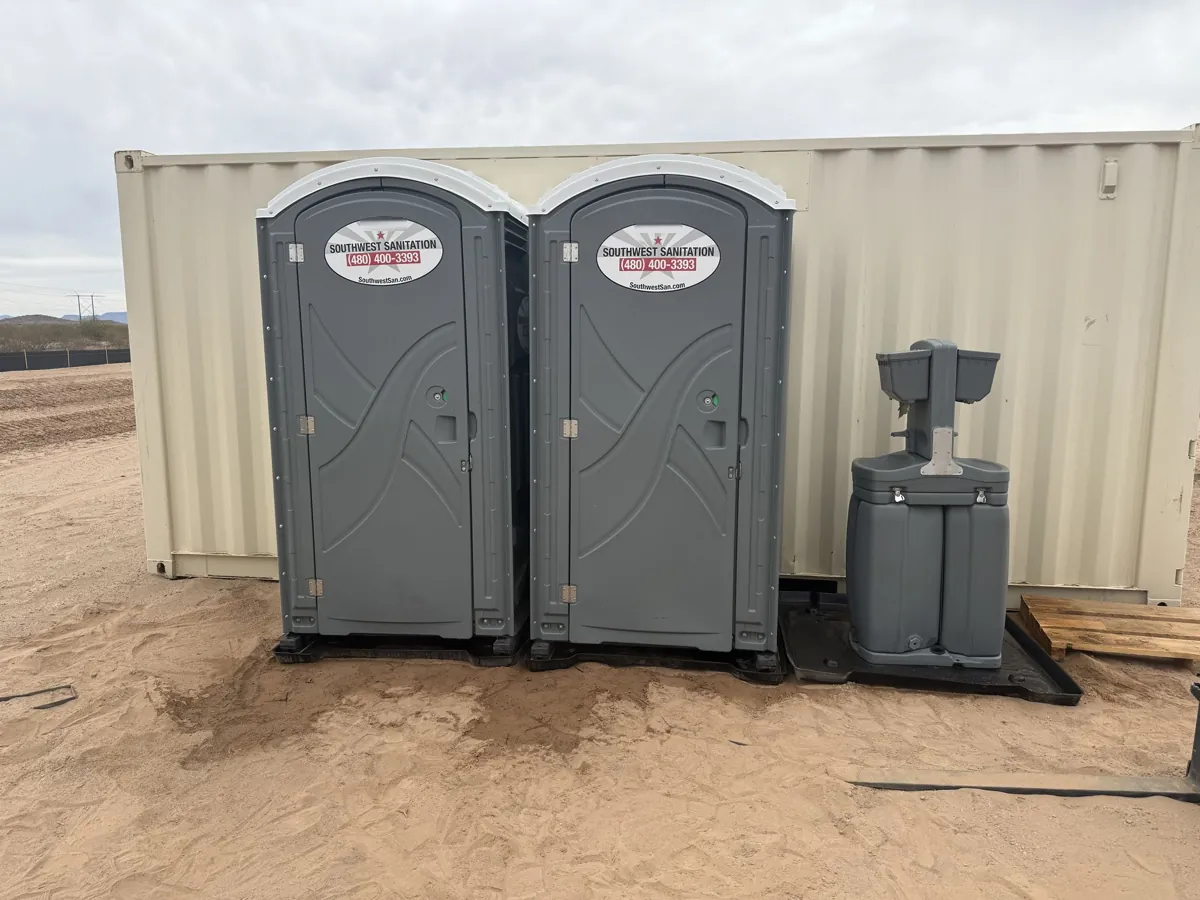
OSHA also requires adequate washing facilities for workers applying paints, coatings, herbicides or insecticides, and in other operations where contaminants could be harmful. Even when it isn’t required, a portable hand wash station gives the crew a place to wash up before lunch, which is something most workers notice.
Where to put the hand wash station
- Next to the restrooms, so washing up is the natural next step.
- Near the break area, if your crew eats on site.
- On level ground, where it’s easy to reach and easy to service.
If you don’t need a separate station, our Deluxe unit has an interior sink with soap and paper towels built in, so workers can wash up inside the unit.
Placement: access for the service truck, shade, and distance from work areas
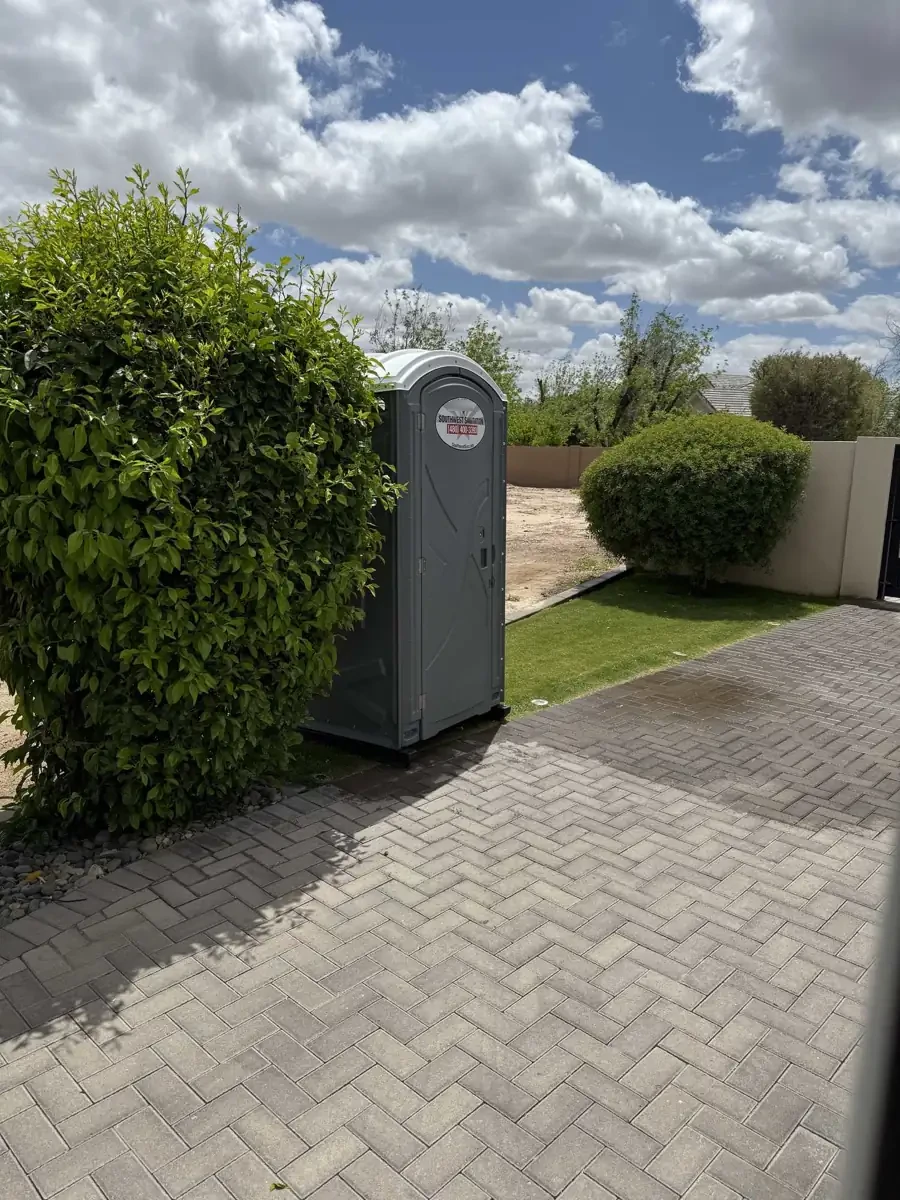
Where the units sit affects how easy they are to use and how reliably they get serviced. Every unit we deliver is placed in front of the property, within 25 feet of the street. That keeps it within reach of our service truck, and we don’t place units in backyards or behind the building.
Placement tips for a job site
- Keep the path clear: don’t block the units with material deliveries, dumpsters or parked equipment, or the service truck can’t reach them.
- Pick firm, level ground: a flat spot keeps the unit stable and the door closing properly.
- Think about shade: if there’s a shaded spot within the placement area, it makes the units more comfortable on warm afternoons.
- Stay clear of heavy equipment: keep units away from where machines swing, back up or dump loads.
- Tell the crew: point out the units on day one so nobody wanders off site looking for a restroom.
Fencing and site security
Many job sites need a perimeter, whether it’s for safety, to keep the public out after hours, or because the permit or the general contractor calls for it. Our temporary portable fencing can be delivered along with your restrooms, so one call covers both.
When you plan the fence line, leave the restrooms where the service truck can still reach them from the street. A unit locked inside a gate it can’t get to won’t get serviced on schedule.
Weekly servicing and how to add units as the crew grows
Weekly servicing is included on every rental. A typical service visit includes pumping out the waste tank, cleaning the unit, and restocking toilet paper and other supplies.
Adding or removing units mid-project
Crews grow and shrink as a project moves from site work to framing to finishes. When you need more capacity, call or request a quote and we’ll deliver the extra units the next business day. Our office is open Monday through Friday, 7am to 5pm, and closed on weekends, so plan additions before Friday afternoon if you want them in place for the next week.
Billing every 28 days and ending the rental
Rentals bill on a 28-day cycle, so you can budget the job in steady, predictable periods instead of month-to-month guesswork. When the work is done, give us 2 days’ notice to schedule your pickup. Building that into your closeout list keeps units from sitting on a finished site.
Working across the Valley? Our construction site restroom rentals page covers job site options, and our Phoenix porta potty rentals page lists the cities we serve.
FAQ: job site sanitation
Under OSHA’s construction standard, a site with 20 or fewer workers needs at least one toilet. With 20 or more workers, it’s one toilet seat and one urinal per 40 workers, and with 200 or more, one toilet seat and one urinal per 50 workers. Treat those as minimums.
OSHA requires adequate washing facilities when workers apply paints, coatings, herbicides or insecticides, or work with other harmful contaminants. Many contractors add a hand wash station on every site anyway, or use Deluxe units, which have an interior sink with soap and paper towels.
Weekly servicing is included on every rental. If your crew grows and the units are getting heavy use, the simplest fix is to add more units.
Units are placed in front of the property, within 25 feet of the street, so our service truck can reach them. We don’t place units in backyards or behind buildings.
We deliver the next business day after you book. Our office is open Monday through Friday, 7am to 5pm.
Give us 2 days’ notice and we’ll schedule the pickup. Rentals bill on a 28-day cycle until the units are picked up.
Get your job site set up
Starting a new site? Request a quote, send us your crew size and start date, and we’ll deliver the next business day. You can also call us at (480) 400-3393, Monday through Friday, 7am to 5pm.