
Key Differences Between Short-Term and Long-Term Porta Potty Rentals
Not every porta potty rental works the same way. A weekend backyard party and a year-long commercial build have almost nothing in common when it comes to booking, pricing, or servicing a portable restroom, yet both fall under the same general category of rental. Renters who don’t distinguish between short-term and long-term terms often end up either overpaying for flexibility they didn’t need or locking into a setup that doesn’t fit how their project actually runs.
The differences show up in pricing structure, servicing frequency, unit selection, delivery logistics, and even the contract itself, and getting any one of those wrong can mean paying more than necessary or running into gaps in service partway through the job. This guide breaks down exactly how the two rental types differ across each of those areas, so you can choose the right structure from the start instead of adjusting mid-project.
What Actually Counts as Short-Term vs Long-Term?
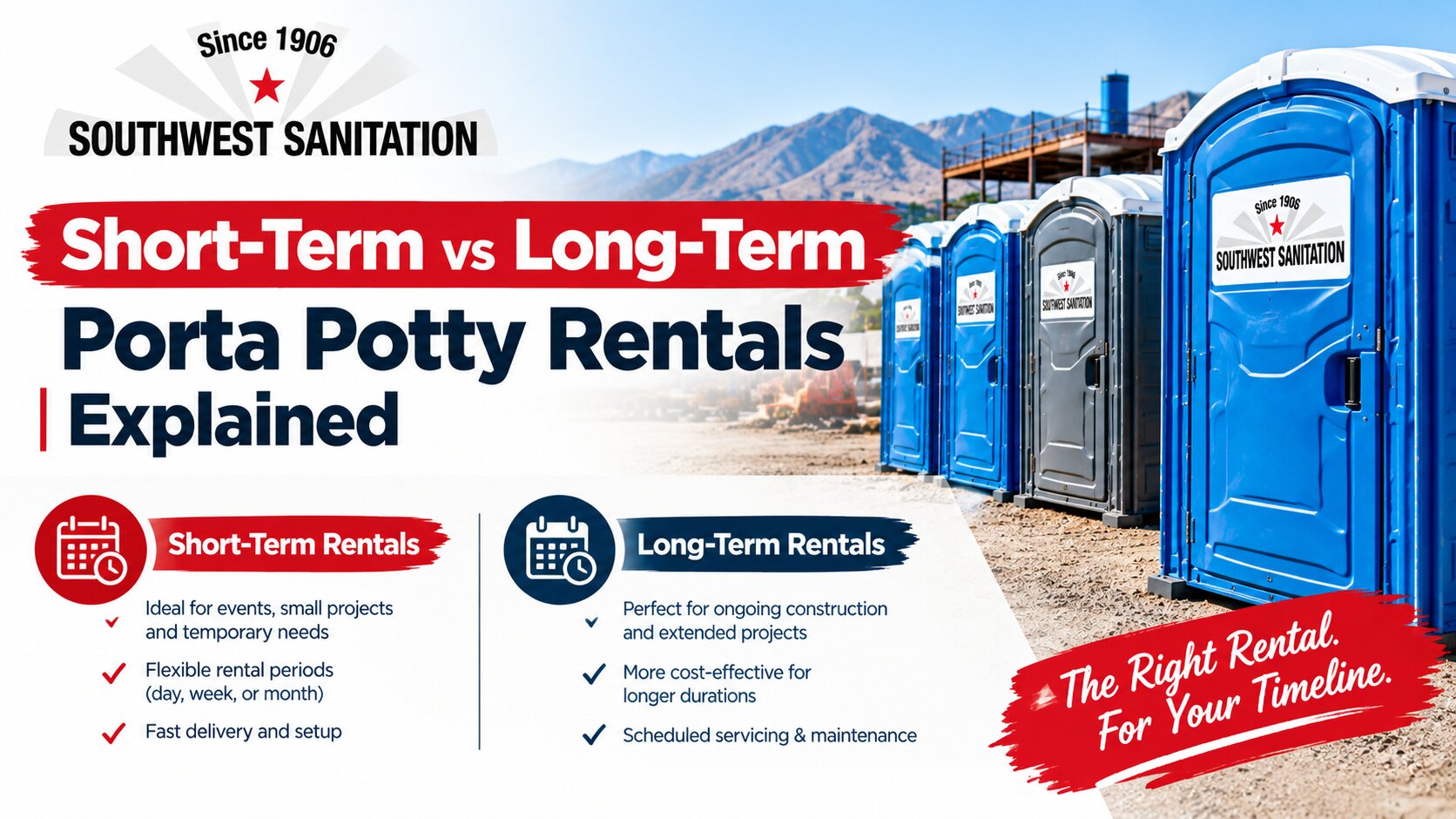
There’s no single industry-wide cutoff, but most rental providers, Southwest Sanitation included, treat anything from a single day up to a few weeks as short-term, and anything running a month or longer as long-term. Events almost always fall into the short-term category: weddings, festivals, backyard parties, and one-day construction jobs all book, deliver, and get picked up within a tight window.
Long-term rentals are the norm for active construction projects, land development, and any site where a crew is working in the same location for months at a stretch. If you’re not sure which category your project falls into, it helps to first understand how porta potty rentals work from booking to pickup, since the process itself shifts depending on which term you’re booking under.
Pricing Structure: Flat Rate vs Recurring Billing
This is usually the first difference renters notice. Short-term rentals are typically priced as a flat rate that covers delivery, the rental period, and pickup in one number, which makes budgeting for a single event straightforward.
Long-term rentals run on a recurring billing cycle instead, usually weekly or monthly, and continue until the unit is called in for pickup at the end of the job. That recurring structure works in your favor on longer projects since the per-period cost is generally lower than booking the equivalent number of short-term rentals back to back, but it also means the total cost isn’t fixed up front the way an event rental is. Our full guide to porta potty rental costs and pricing factors breaks down exactly what drives pricing in both structures, from delivery distance to servicing frequency, so you can budget accurately whichever term you end up booking.
Servicing Frequency Changes Over Time
A short-term rental is usually serviced once, right before delivery, since the unit is picked up before it needs a second cleaning. A long-term rental is a different story entirely.
Units on extended job sites need a regular servicing schedule, typically weekly, to stay usable and to meet the sanitary condition standard that OSHA requires for any toilet counted toward its site minimums. If you haven’t worked out how many units your crew actually needs, our breakdown of how many portable toilets are required per construction worker on site covers the exact ratio, and that same unit count is what your long-term servicing schedule gets built around.
Unit Type Considerations for Longer Stays
The unit that works fine for a Saturday afternoon isn’t always the right pick for six months of daily use. For a deeper comparison of what’s available, our detailed breakdown of different types of portable toilets and their uses is worth a read, but as a general rule: Standard Porta Potty units hold up well for both short bursts and extended job sites when they’re serviced on schedule, while Deluxe Porta Potty units are a better fit when a long-term rental also needs to look presentable, such as a construction site with regular client walkthroughs.
For projects where a more private, self-contained option makes sense over a long stretch, a Single Unit Porta Potty Trailer is worth considering as well. Our full guide on choosing the right porta potty for construction sites and events walks through matching unit type to project type in more detail.
Contract Terms and Flexibility
Short-term rentals are simple agreements: you book a date range, the unit shows up, and it’s picked up shortly after the event ends. There’s little to negotiate beyond quantity and unit type.
Long-term rentals typically involve a jobsite account with more flexible terms built in, since construction timelines shift constantly. A good long-term agreement lets you add or remove units as crew size changes across project phases, adjust servicing frequency if usage increases, and extend the rental without starting a new contract from scratch if the job runs longer than originally planned. When you’re comparing providers for a long-term booking, ask directly how they handle mid-project changes, since that flexibility matters more over six months than it ever does over a single weekend.
Delivery, Placement, and Site Changes Over Time
Delivery logistics look different depending on the term too. A short-term rental gets dropped at one confirmed location and picked up from the same spot once the rental period ends, so placement is decided once and doesn’t need to change.
Long-term rentals on active construction sites often need to move as the project progresses. A unit placed near the entrance during site prep might need to relocate once framing starts and material staging takes over that space, or a second unit might get added near a different work zone once a new phase begins.
When you’re setting up a long-term rental, it’s worth discussing relocation policies with your provider up front, including whether repositioning an existing unit costs extra or is included as part of the ongoing service. Short-term renters generally don’t need to think about this at all, since the unit’s footprint for the weekend is set the moment it’s placed.
Which One Fits Your Project? Quick Decision Guide
- Renting for a single day, weekend, or up to a few weeks: short-term, flat-rate rental.
- Renting for a month or longer, or for an active construction site: long-term, recurring billing.
- Need the price locked in up front with no ongoing commitment: short-term.
- Expect crew size or project scope to change over time: long-term with flexible contract terms.
- Site needs weekly servicing to stay sanitary and OSHA-compliant: long-term.
- Unsure which category you fall into: request a quote and describe your project timeline.
Get Matched with the Right Rental Term
Whether you need a single unit for the weekend or a fleet of units serviced weekly for a year-long build, Southwest Sanitation structures the rental around how your project actually runs, not a one-size-fits-all contract.
Browse the full porta potty rental lineup, or get a free quote and our team will help you decide between a short-term or long-term setup based on your timeline and crew size. Have questions first? Contact us and we’ll walk you through it.